The Challenge
QuantumTrader processes over $500 million in daily trading volume. At that scale, even a small percentage of fraudulent transactions represents massive losses. Their existing rule-based system was catching obvious fraud but missing sophisticated patterns — and the 4-hour delay in detection meant money was long gone before anyone noticed.
The regulatory environment made cloud-based AI solutions problematic. Financial data couldn't leave their infrastructure, and the latency of round-trips to external APIs was unacceptable for real-time trading decisions. They needed sub-100ms inference times with complete data sovereignty.
Their previous vendor had promised "AI-powered fraud detection" but delivered a glorified rules engine with a machine learning sticker on it. QuantumTrader needed a partner who understood both the ML and the fintech compliance landscape.
Our Approach
We designed a hybrid system that combines the interpretability of rule-based systems with the pattern recognition capabilities of modern machine learning. The key insight: not all transactions need the same level of scrutiny.
Our tiered approach routes transactions through increasingly sophisticated checks based on risk signals. Low-risk transactions pass through in milliseconds. High-risk transactions get the full ML treatment — and we built that to run in under 50ms on their existing infrastructure.
Key Decisions
Edge-Deployed ML Models
We deployed lightweight, distilled models directly on QuantumTrader's trading servers. No network round-trips, no cloud dependencies. The models run inference locally with GPU acceleration.
Ensemble Approach for Accuracy
Rather than relying on a single model, we built an ensemble of specialized models: one for velocity patterns, one for geographic anomalies, one for behavioral fingerprinting. The ensemble votes, and disagreements trigger human review.
Continuous Learning Pipeline
Fraud patterns evolve constantly. We built an automated retraining pipeline that incorporates new labeled data weekly, with A/B testing to ensure new models outperform before deployment.
Explainable Decisions for Compliance
Regulators want to know why a transaction was flagged. Every decision comes with a human-readable explanation: "Flagged due to unusual transaction velocity (15x normal) from new device in foreign jurisdiction."
The Solution
The final system processes transactions through a multi-stage pipeline. Initial screening uses fast heuristics to pass through 95% of legitimate transactions instantly. The remaining 5% enter the ML evaluation path.
Our custom model architecture combines transformer-based sequence analysis (for transaction history patterns) with graph neural networks (for relationship analysis between accounts). This dual approach catches both individual account fraud and coordinated ring attacks.
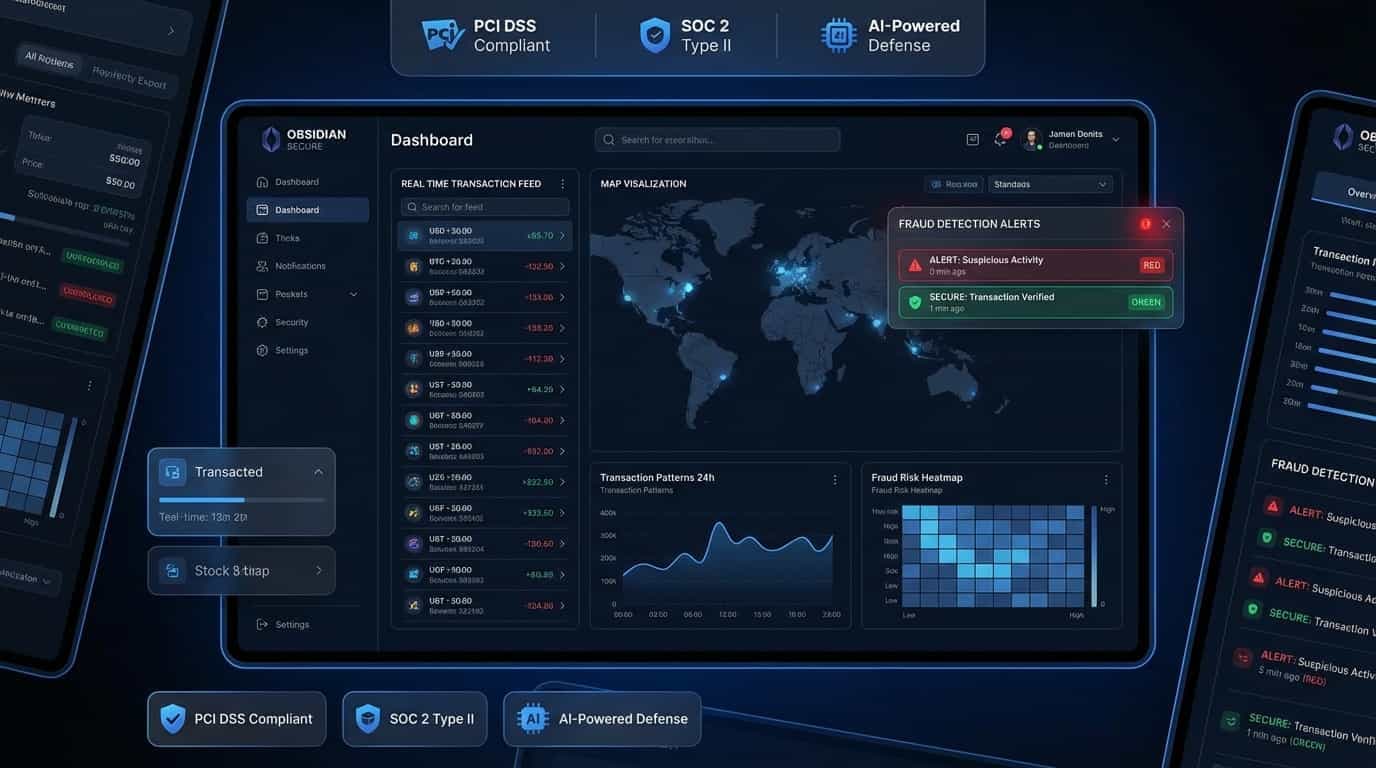
The system integrates directly with QuantumTrader's trading engine, providing synchronous decisions without blocking legitimate trades. A dedicated dashboard gives the security team visibility into flagged transactions, model performance metrics, and emerging fraud patterns.
Tech Stack
- PyTorch (Custom ML Models)
- ONNX Runtime (Optimized Inference)
- Rust (High-performance Pipeline)
- PostgreSQL with TimescaleDB
- Redis (Real-time Feature Store)
- Kubernetes
- NVIDIA T4 GPUs
The Outcome
Within the first week of deployment, the system caught a coordinated fraud ring that had been operating undetected for months. The ring had been exploiting a timing vulnerability that rule-based systems couldn't see, but our sequence model flagged it immediately.
The numbers tell the story: 99.7% detection accuracy with a 0.02% false positive rate. That's critical — false positives mean freezing legitimate customer accounts, which destroys trust. Our system is accurate enough to take automatic action on flagged transactions without human review.
In the first six months, QuantumTrader estimates $2.3 million in prevented fraud. The system paid for itself in the first month.
Perhaps more importantly, the system has given QuantumTrader a compliance story they can tell regulators with confidence. The explainability layer satisfies audit requirements, and the on-premise deployment addresses data residency concerns. They've since expanded to three additional geographic markets, each with its own locally-deployed instance.